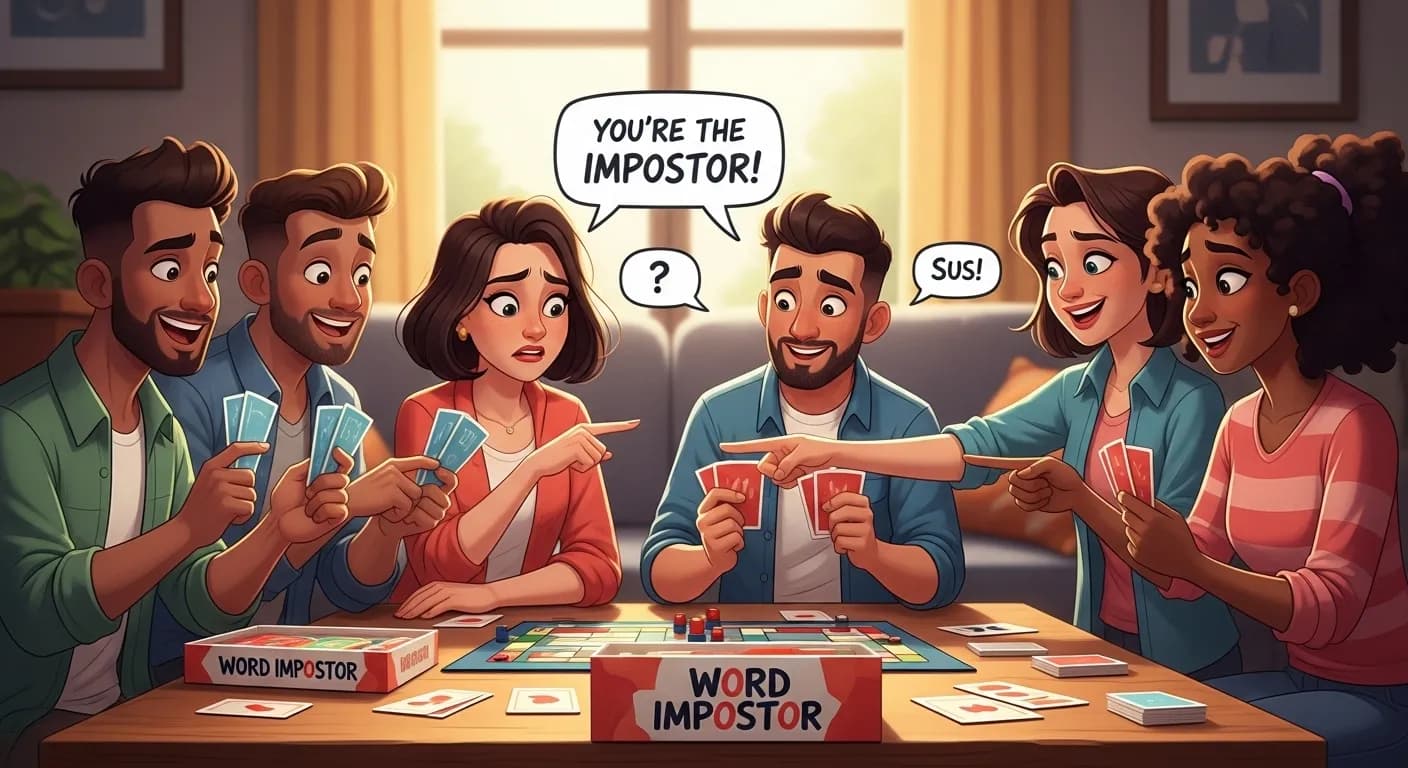

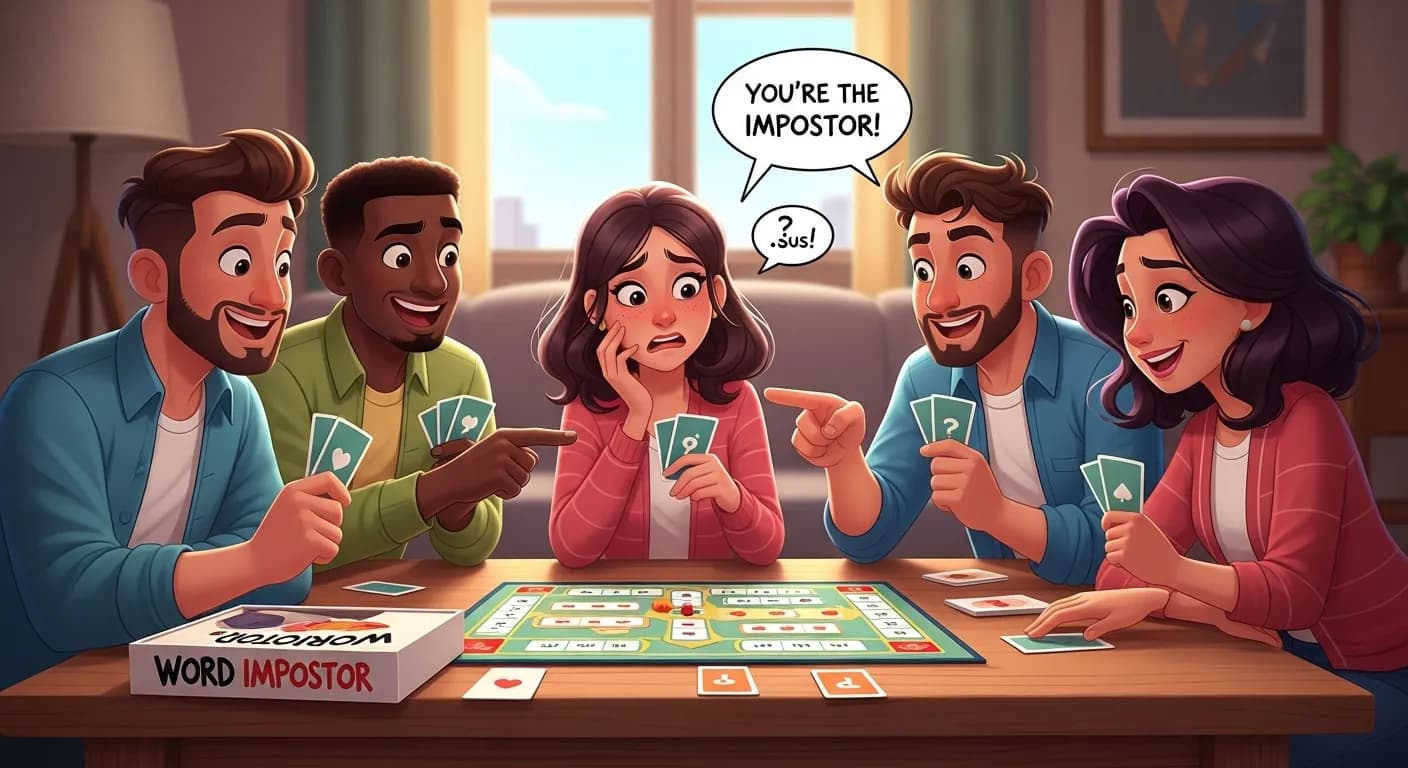

So someone sent you a link and said "just join, it'll be fun." Now you're staring at a room code and you have absolutely no idea what's about to happen. Don't worry — you're in the right place. Word Impostor is one of the easiest party games to learn, but the social dynamics that emerge once you actually start playing? That's where things get genuinely wild.
This guide covers everything: the setup, the roles, the gameplay loop, and a few early tips to make sure your first game doesn't end with you accidentally exposing yourself in round one.

What Is Word Impostor?
Word Impostor is a free, browser-based social deduction game that you can play directly in your browser with 3 to 12 people. No downloads, no account needed, no subscription. One person creates a room, shares a 5-character code or invite link, and everyone else joins from their phone or computer.
The core idea is simple: most players get a secret word, one player gets nothing (or a different fake word), and everyone has to figure out who the impostor is before the impostor fools them all. It plays out in 10–15 minutes per round, and you'll want to play it at least four or five times in a row — guaranteed.
Setting Up Your First Game
Creating a room takes about 10 seconds. Head to the homepage, click "Create Game," enter your name, and you're done. You'll get a unique 5-character room code. Share that code with your friends on Discord, WhatsApp, iMessage, or wherever you hang out. They just need to visit the site, click "Join Game," and type it in.
Before starting, the host can adjust a few settings:
- Number of Imposters: Default is one. For larger groups (8+), you can bump this to two or even three for extra chaos.
- Game Mode: "Classic" or "In the Dark." We'll cover what "In the Dark" does in a dedicated guide — for your first game, stick to Classic.
- Word Category: You can let the game pick a word at random, or choose a specific category (food, places, movies, etc.).
The Roles Explained
When the host starts the game, everyone privately receives a card on their screen. There are only two possible roles:
Civilian
You get a card showing the secret word — something like "Lighthouse" or "Dentist." Your job is to prove to everyone else that you know this word, without making the clue so obvious that the impostor can just steal it and guess correctly at the end. Civilians win if the impostor gets voted out and fails their final guess.
The Impostor
In Classic mode, you get a red card that says you're the impostor — you have no idea what the secret word is. In "In the Dark" mode, your card looks like a normal civilian card, but has a completely different, fake word on it. You have to figure out you're even the impostor in the first place. Both modes are brutal in different ways.
How a Round Plays Out
Once everyone has checked their card (privately — don't show anyone your screen), the clue-giving begins. Going around the group in order, each player says exactly one word as a hint related to the secret word. Just one. No sentences, no context, no explanation.
This is harder than it sounds. If the word is "Ocean" and you say "water," that's technically correct but way too generic — it helps no one figure out if you're real or fake. Say "bioluminescence" and people will either think you're brilliant or extremely suspicious. The sweet spot is something specific enough to prove you know the word, vague enough that the impostor can't just copy it.
After everyone has given a clue, discussion opens up. This is where the real game happens. Players accuse, defend, deflect, and try to catch the impostor through logic and gut feeling. After a few minutes of chaos, everyone votes. The player with the most votes gets revealed.
If the impostor is voted out, they get one last shot: they can guess the secret word. If they're right, they still win. If they're wrong, the civilians take it.
Winning Conditions
There are three possible outcomes per round:
- Civilians win: The impostor is voted out and fails to guess the secret word.
- Impostor wins by survival: Someone who is NOT the impostor gets voted out.
- Impostor wins by guessing: The impostor is caught but correctly guesses the secret word anyway.
Your First Game — Quick Tips
Before you dive in, here are a few things that will make your first round smoother:
Don't overthink your clue
New players tend to freeze when it's their turn. The person before you just said something brilliant, and now you're panicking. Take a breath. If you know the word, you know the word — just say something genuine that connects to it. Your first instinct is usually fine.
Pay attention to hesitation
The impostor often pauses a beat longer than everyone else before giving their clue. They're working with zero information, so they're either guessing or stitching together hints from what others said. If someone takes noticeably longer and their clue feels slightly off-topic, file that away.
Don't accuse in the first round
Seriously. Everyone looks suspicious after one clue. Wait until two or three have gone around before you start forming opinions. Early accusations based on nothing tend to get the wrong person eliminated, and the impostor loves watching that happen.
The impostor wants you distracted
If someone is being unusually loud and accusatory toward another player early on, ask yourself — is that a genuine read, or are they trying to steer the conversation? Imposters who go on offense to avoid being suspected are a common and effective strategy.
What Makes Word Impostor Special
There are a lot of social deduction games out there — Among Us, Codenames, Spyfall. But Word Impostor has a specific combination of things that makes it uniquely gripping. The one-word clue format creates natural tension without requiring long conversations. Rounds are short. And the "In the Dark" mode — which we cover in its own guide — adds a twist so good it genuinely changes the game.
Most importantly, it's free and runs completely in your browser. So whether you're playing at 2am on a Discord call with friends from three different countries, or sitting in the same room and passing your phones around, there's no friction. You just play.
Ready? Create a room and see who among your friends is the best liar.