
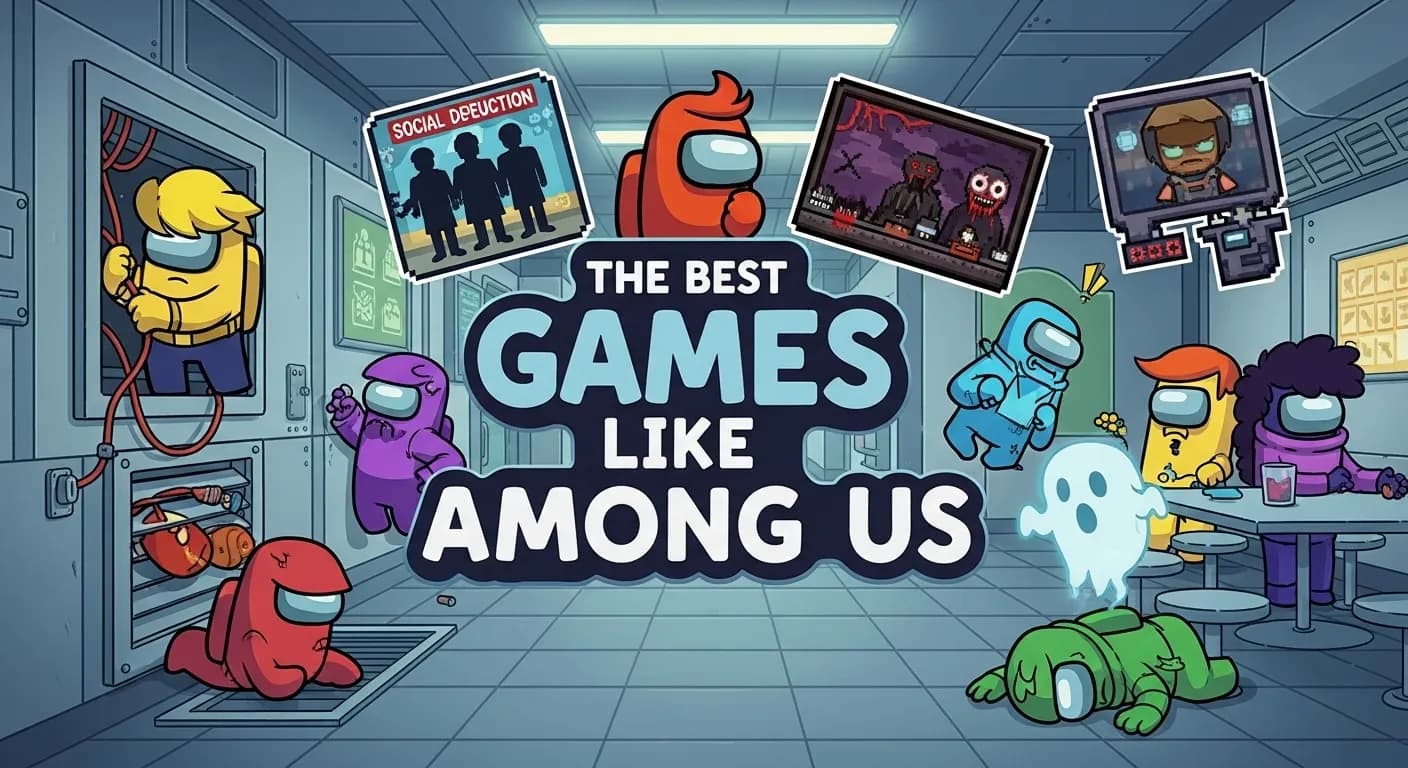

Among Us hit something universal in 2020. The formula — a small group of saboteurs hidden among a crew of well-meaning workers, everyone trying to figure out who's killing whom — turned millions of casual players into obsessive fans of social deduction games overnight. But Among Us requires a download, an account (for some features), and a fairly specific network setup to play with friends.
The good news: the genre it popularized is absolutely thriving, and several of the best alternatives run directly in your browser with zero setup. Here's what's worth your time.
Word Impostor — The Best Among Us Alternative
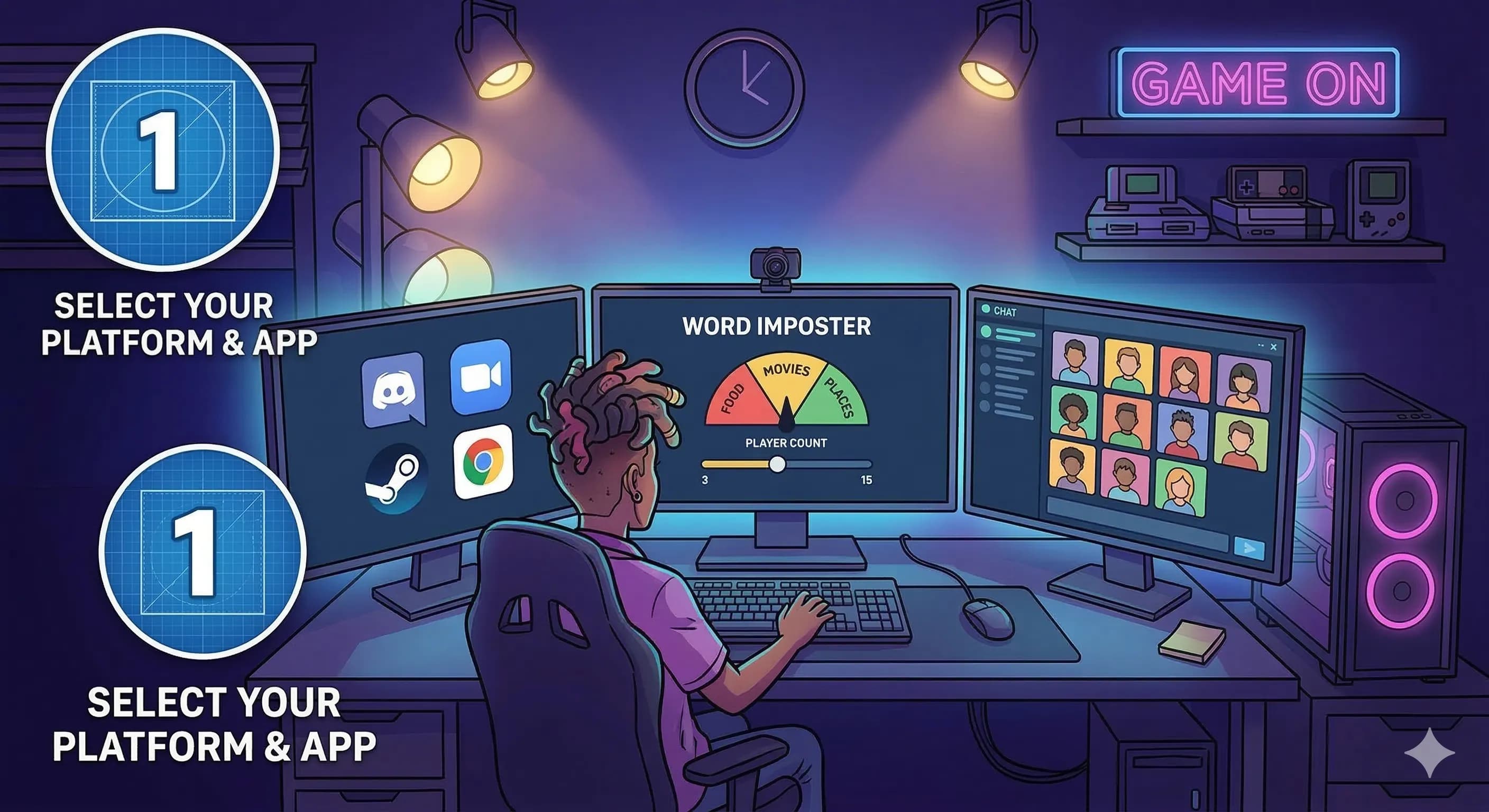
Word Impostor captures the core Among Us tension — one (or more) hidden imposters trying to fool a group of players who all share the same information — and packages it in a format that takes 30 seconds to set up and 10 minutes to play. No download, no account, completely free.
Instead of running tasks on a spaceship, players give one-word clues about a secret word. The impostor doesn't know the word. The civilians do. The accusation phase plays out in real time, just like Among Us's meeting rounds but without the voting timer creating artificial pressure. The In the Dark mode adds a layer of deception that even Among Us never quite achieved — the impostor doesn't even know they're the impostor. If you loved Among Us, this will immediately feel right.
Town of Salem — For Deeper Role Variety
Town of Salem is the spiritual successor to Mafia and Werewolf. It's free to play in the browser and supports a massive variety of roles — healers, detectives, blackmailers, serial killers — that create complex webs of allegiance and deception. Games last longer (30–60 minutes) and require more investment to learn, but the depth is unmatched in the genre.
Best for groups that have exhausted simpler games and want something with genuine strategic complexity. Not ideal as a casual drop-in, but brilliant for dedicated game nights.
Spyfall — If You Love Conversation
We did a full breakdown between Word Impostor and Spyfall, but the short version: if you want something conversation-heavy where a hidden spy answers questions about a secret location without knowing where they are, Spyfall is excellent. Multiple browser versions exist. The format rewards naturally theatrical players.
Skribblio Deduction Mode — Creative Chaos
It's primarily a drawing game, but Skribbl.io's custom word packs can be engineered into something resembling a deduction game where the drawing itself becomes a clue. It doesn't have hidden roles, but the "read the room" energy is very similar to social deduction classics. Great as a warm-up between heavier games.
Wavelength — The Judgment Dial Game
Wavelength is a board game with a free fan-made browser version. One player draws a secret position on a hidden spectrum (hot to cold, dangerous to safe, ugly to beautiful) and gives a one-word clue. Their team tries to guess the position on the dial. It's not strictly deduction, but the "figuring out how your teammate thinks" mechanic is deeply satisfying and adjacent to the genre in interesting ways.
Werewolf Online — Classic, No Materials
Good old-fashioned Werewolf (Mafia's wolf-themed cousin) is available on several free browser platforms. A group of townspeople tries to eliminate hidden werewolves through daily votes, while a game moderator guides the night phase. It's the purest form of the social deduction genre and worth playing at least once if you're a fan of Among Us. Just know that it requires a designated moderator and works best in person.
How to Jump From Among Us to Word Impostor
If you're bringing an Among Us crowd to Word Impostor for the first time, frame it this way: "It's like the meeting phase of Among Us, but the whole game. No tasks, no map — just the accusation and deduction." Among Us veterans typically pick it up in one round and start developing strategy immediately.
The key difference they'll notice: in Among Us, you have direct evidence (body reports, vent sightings). In Word Impostor, you only have indirect evidence — behavioral patterns, clue quality, the feeling that someone's words don't quite add up. It's more psychological and less information-based, which some players find more engaging and others find more frustrating. Both are valid.
Ready to make the jump? Create a free Word Impostor room and run a few rounds. Check out our impostor strategy guide and civilian guide to get your group up to speed quickly.