

Large group game nights have a reputation for collapsing into chaos. Someone's rules explanation triggers three side conversations. Half the group is on their phones before round one starts. The person in the corner hasn't said anything in 20 minutes. Getting 10 people genuinely engaged in a single game for 30+ minutes is actually a design challenge, and most games aren't built for it.
These are the options that actually work for groups of 8 or more — online and in-person.
1. Word Impostor (With Multiple Imposters)
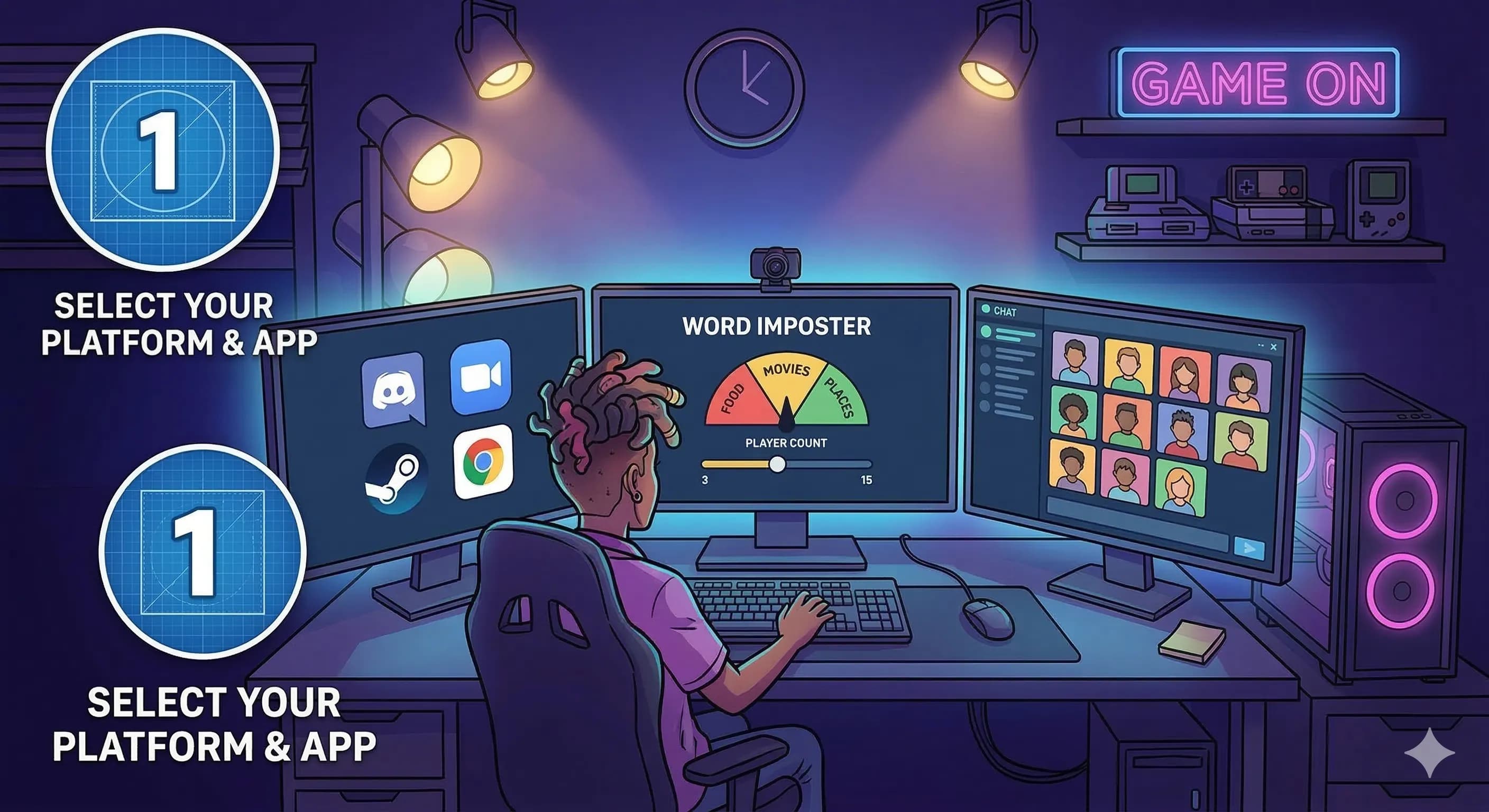
For groups of 8 to 12 players, Word Impostor works beautifully with two imposters instead of one. The host can configure this in the room settings. Having two imposters who don't know each other's identity changes the social dynamic dramatically — civilians can't trust anyone, and the two imposters are trying to avoid each other's suspicion while simultaneously avoiding the group's. It's genuinely chaotic in the best way.
The game scales well up to about 12 players before the clue-giving round gets too long. Above 12, consider splitting into two rooms and comparing results.
2. Jackbox Party Games
Jackbox titles are specifically engineered for large groups where everyone participates on their phone. Quiplash, Fibbage, and Drawful all support 8+ audience members who can vote and react even if they're not in the main game. One person owns the game and streams it; everyone else joins via a code on their phone. Works for in-person and video call setups equally well.
3. Mafia / Werewolf
The classic. Mafia requires at least 8 people to function properly — below that, the game math gets imbalanced. With 10–15 players, the nighttime elimination and daytime debate structure creates genuinely high drama. You need a designated game master who doesn't play, but otherwise the barrier to entry is zero (not even cards — just pieces of paper or a phone app).
4. Ultimate Werewolf (App)
The Ultimate Werewolf companion app removes the need for a game master and adds dozens of role variants. It's the most accessible version of the werewolf genre for large groups and supports up to 75 players (though we strongly recommend keeping it under 20 for playable game sessions).
5. Trivia Night (Kahoot or Mentimeter)
Kahoot and Mentimeter support virtually unlimited players and are specifically designed for large group situations. One host controls the game from one screen; everyone else submits answers on their phone. For trivia nights, team vs. team formats with 4 people per team work better than free-for-all.
6. Codenames Teams Format
Standard Codenames is designed for 4–8 players, but the Teams format — with large teams where everyone contributes to guesses — scales well to 10–12. The spymasters remain one per team; everyone else discusses and votes on which word to guess next. The discussion is where the game shines with large groups.
7. GeoGuessr — Team Mode
GeoGuessr drops you in a random Google Street View location and you guess where in the world you are. In team mode with a shared screen, everyone shouts out observations ("those electrical poles look Eastern European," "that's Cyrillic script") and the group collaborates to narrow down the location. Surprisingly engaging for large groups and free to play at a basic level.
8. Bingo (Custom Themes)
Hear us out — themed bingo is underrated. Custom bingo card generators let you build cards around any theme: TV shows, your friend group's inside jokes, movie quotes, sports teams. Unlimited players, zero friction, and surprisingly competitive when the stakes are a round of drinks or bragging rights.
9. Among Us (8+ Players)
Among Us was designed for groups of 4–15 and genuinely thrives in the 8–10 range. Two or three imposters, all roles turned on, creates a paranoid atmosphere that's hard to replicate. The task-based structure keeps even non-impostor players engaged between meetings. Requires downloading the app but is free on mobile.
10. The Mirror Game (Freestyle Improv)
For groups that love improv and don't need a digital game, the Mirror Game is a pure social deduction exercise: one person leaves the room while the group agrees on a leader. The leader chooses actions (tapping, swaying, clapping) and everyone mirrors them. The person who left comes back and tries to identify the leader by watching for who initiates movements. Simple, requires nothing, scales to any group size.
Making Any Game Work for Large Groups
The common thread across all of these is active participation — every player has something to do on every turn, or the downtime between turns is short enough that engagement doesn't drop. When choosing games for large groups, prioritize options where no one is eliminated early, everyone votes or participates in every round, and the social interaction happens constantly rather than in isolated one-on-one moments.
For your next big group game night, start with Word Impostor in multi-impostor mode as your warm-up. It takes 60 seconds to set up and gets conversation flowing immediately. Then check out our complete game night hosting guide for how to structure the rest of the evening.